The Best Sustainable and Eco-Friendly Winter Outerwear Brands Worth Investing In
Why Sustainable Winter Outerwear Matters More Than Ever
The winter outerwear industry carries a heavier environmental cost than most shoppers realize. Conventional jacket production relies heavily on virgin synthetic fibers, water-intensive dyeing processes, and supply chains that offer little transparency about labor conditions or emissions.
A single synthetic puffer jacket can shed thousands of microplastic fibers with every wash, and the petroleum-derived materials used in most budget outerwear take centuries to break down in landfill. When you factor in the sheer volume of coats discarded each season — often after only a few winters of use — the cumulative impact becomes significant.
The good news is that the sustainable outerwear market has matured considerably. Brands are now producing parkas, wool coats, and insulated jackets that perform just as well as their conventional counterparts, using recycled materials, ethical manufacturing practices, and carbon-conscious production methods. Choosing one of these options isn't a compromise — for many buyers, it's an upgrade.
What Actually Makes a Winter Jacket "Eco-Friendly"?
A genuinely eco-friendly winter jacket addresses three distinct areas: the materials it's made from, how it's manufactured, and how long it lasts. Any brand that focuses on only one of these while ignoring the others deserves closer scrutiny.
Materials are the most visible piece of the puzzle. Recycled polyester (rPET), made from post-consumer plastic bottles or reclaimed ocean plastics, significantly reduces the demand for virgin petroleum. Responsibly sourced wool, reclaimed down, and bio-based insulation alternatives each carry their own environmental profile — and their own trade-offs.
Manufacturing and supply chain transparency matter just as much. A jacket made from recycled fabric but produced in a facility with poor labor standards or no emissions controls is not truly sustainable. Look for brands that publish their factory locations, audit results, and worker wage data — not just their material sourcing.
Finally, durability and longevity are sustainability strategies in themselves. A well-constructed coat that lasts ten winters has a far lower lifetime environmental footprint than a cheaper alternative replaced every two or three years. The buy-less, buy-better philosophy isn't marketing language — it's arithmetic.
Key Certifications and Standards to Look For
Third-party certifications are the most reliable way to verify a brand's sustainability claims. They exist precisely because self-reported "eco-friendly" labels are easy to manufacture and hard to challenge.
Here are the most credible standards to look for when shopping for winter outerwear:
- bluesign® — Certifies that textiles are produced with minimal environmental impact, covering chemical safety, resource efficiency, and worker safety throughout the manufacturing process.
- Global Recycled Standard (GRS) — Independently verifies the recycled content in a product and the chain of custody from raw material to finished garment. Essential for evaluating recycled polyester or recycled down claims.
- B Corp Certification — Applies to companies, not products. A B Corp designation means the business as a whole meets rigorous standards for social and environmental performance, accountability, and transparency.
- Fair Trade Certified — Focuses on labor conditions and fair wages for workers in the supply chain, particularly relevant for brands manufacturing in developing countries.
- Responsible Down Standard (RDS) — Ensures that down and feather fill comes from birds that have not been subjected to unnecessary harm, and that the supply chain is fully traceable.
No single certification covers everything. A jacket carrying the GRS label confirms its recycled content but says nothing about labor practices. Using certifications as a filter — rather than a final verdict — is the most practical approach.
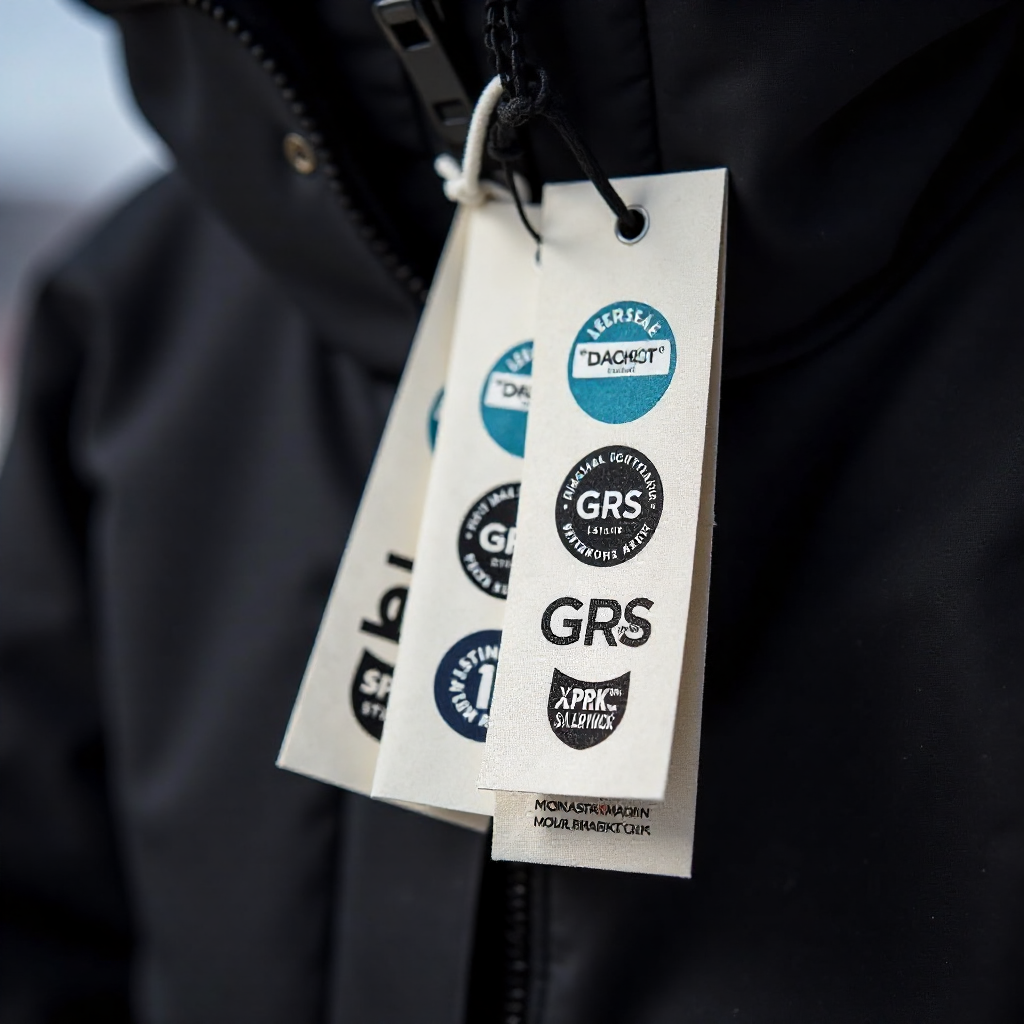
Sustainable Materials Used in Eco-Friendly Winter Outerwear
The material a winter coat is made from determines both its environmental footprint and its performance in cold weather. These are the most common eco-conscious options and what you can realistically expect from each.
Recycled Polyester (rPET)
Recycled polyester is the most widely used sustainable shell material. Produced from post-consumer plastic bottles or reclaimed fishing nets, it requires roughly 30–50% less energy to produce than virgin polyester and diverts plastic waste from landfill or ocean. Performance-wise, it's largely indistinguishable from conventional polyester — water-resistant, wind-blocking, and durable. The ongoing concern is microplastic shedding during washing, which can be mitigated with a microfiber-catching laundry bag.
Recycled and Reclaimed Down
Down remains one of the most effective natural insulators by warmth-to-weight ratio. Reclaimed down — sourced from post-consumer duvets and pillows, then cleaned and reprocessed — delivers the same thermal performance with a fraction of the new material impact. Look for GRS or RDS certification to confirm the sourcing is legitimate.
PrimaLoft® and Synthetic Bio-Based Insulation
PrimaLoft® has become a benchmark in synthetic insulation, and its Bio range is made from 50–100% recycled content. It performs well when wet — unlike natural down, which loses loft when damp — making it a practical choice for high-precipitation climates. Thinsulate™ by 3M offers similar benefits and is increasingly available in recycled variants.
Responsibly Sourced Wool
Wool is naturally renewable, biodegradable, and an excellent insulator. The key is sourcing: conventional wool production can involve significant land degradation and animal welfare concerns. Certifications like the Responsible Wool Standard (RWS) or ZQ Merino indicate that both land and animal welfare practices meet defined benchmarks.
Deadstock and Upcycled Fabrics
Some smaller brands build their outerwear from deadstock fabric — surplus material from larger manufacturers that would otherwise go to waste. This approach has a genuinely low footprint but comes with limitations: limited colorways, inconsistent availability, and smaller production runs. It's a strong sustainability signal when you see it, though it's rarely scalable.
Types of Sustainable Winter Outerwear to Consider
Sustainable options now exist across every major outerwear category. The right choice depends on your climate, activity level, and how you'll actually use the coat.
Parkas are the workhorses of cold-weather outerwear — long, heavily insulated, and designed for sustained exposure to low temperatures. Eco-friendly parkas typically use recycled shell fabrics combined with reclaimed down or PrimaLoft insulation. They're the most practical option for urban winters in genuinely cold climates.
Puffer jackets offer a lighter, more versatile silhouette. Sustainable puffers made with recycled fill and rPET shells have become widely available and are often the entry point for buyers new to eco-conscious outerwear. The trade-off is warmth ceiling — most puffers top out around -10°C to -15°C without additional layering.
Wool coats — whether tailored or more casual — are among the most naturally sustainable options available, provided the wool is responsibly sourced. They offer excellent wind resistance and mid-range warmth, though they're less suited to wet conditions without a water-resistant treatment.
Shell jackets and anoraks are designed for layering rather than standalone insulation. When made from recycled or bluesign®-certified fabrics, they're a low-impact option for active outdoor use, where breathability and packability matter as much as warmth.
How to Evaluate a Brand's Sustainability Claims Before You Buy
Greenwashing — the practice of presenting a product or company as more environmentally responsible than it actually is — is widespread in fashion. Knowing what to look for protects both your money and your values.
Start with the product page itself. Vague language like "eco-conscious" or "made with sustainable materials" without specifics is a red flag. Credible brands name the exact recycled content percentage, the certification body that verified it, and the factory or region where the garment was produced.
Ask these questions before committing to a purchase:
- Does the brand publish a supplier list or factory audit results?
- Are sustainability certifications verifiable on the certifying body's website?
- Does the brand address the full product lifecycle — including end-of-life take-back or repair programs?
- Are carbon-neutral or net-zero claims backed by a recognized offset standard, or are they unverified?
The FTC's Green Guides provide a useful framework for understanding what environmental marketing claims are legally required to substantiate in the US — worth reading if you want to sharpen your skepticism.
One practical shortcut: cross-reference a brand's claims on independent platforms like Good On You, which rates fashion brands across environment, labor, and animal welfare using publicly available data. It won't catch everything, but it surfaces inconsistencies quickly.
Getting the Most Out of Your Eco-Friendly Winter Coat
The most sustainable coat is the one you keep wearing. Longevity is a core sustainability strategy, and how you care for your outerwear directly affects how long it performs.
Wash insulated jackets infrequently and follow the care label precisely. Down-filled coats need low heat and tennis balls in the dryer to restore loft; synthetic insulation is more forgiving but still benefits from gentle cycles. Using a microfiber-catching laundry bag for any synthetic shell reduces microplastic shedding significantly.
When seams split or zippers fail, repair rather than replace. Many brands now offer repair services or partner with local tailors — and a zipper replacement typically costs a fraction of a new coat's price. If a brand offers a take-back or recycling program at end of life, register for it or make a note to use it when the time comes.
The price-per-wear value calculation is worth doing explicitly. A $400 sustainable parka worn 120 days a year for eight years costs roughly $0.42 per wear. A $150 fast-fashion equivalent replaced every three years costs more per wear and generates more waste. The math consistently favors quality — which is why durability and longevity belong at the center of any honest conversation about eco-friendly outerwear.
Frequently Asked Questions
Is recycled polyester truly better for the environment than virgin polyester?
Yes, in most measurable ways. Recycled polyester (rPET) requires significantly less energy and water to produce and diverts plastic waste from landfill or ocean. The primary ongoing concern is microplastic shedding during washing, which affects both recycled and virgin polyester. Using a microfiber filter bag and washing less frequently reduces this impact considerably.
How do I know if a brand's sustainability claims are genuine or greenwashing?
Look for third-party certifications from recognized bodies (bluesign®, GRS, B Corp, Fair Trade) and verify them directly on the certifying organization's website. Brands making credible claims will name specific factories, publish audit results, and provide exact recycled content percentages — not just vague "eco-friendly" language.
Are sustainable winter jackets warm enough for extreme cold weather?
Yes. Reclaimed down and advanced synthetic insulations like PrimaLoft® Bio deliver warmth comparable to conventional alternatives. For extreme cold (below -20°C), look for high fill-power reclaimed down or layered insulation systems. The material's origin doesn't affect its thermal performance.
What is the most eco-friendly insulation for a winter coat?
There's no single answer — it depends on your priorities. Reclaimed down has excellent warmth-to-weight performance and uses post-consumer material, but loses insulating power when wet. Recycled synthetic insulation like PrimaLoft® Bio maintains warmth when damp and is fully traceable. Responsibly sourced wool is biodegradable and renewable. Each involves trade-offs worth considering against your climate and use case.
Can sustainable outerwear be affordable, or is it always expensive?
Genuinely sustainable outerwear tends to cost more upfront than fast-fashion alternatives, reflecting fair wages, certified materials, and quality construction. However, the price-per-wear value over a longer lifespan often makes it more economical over time. Entry-level options from certified brands do exist in the $150–$250 range, and the secondhand market for durable sustainable coats is growing — making quality outerwear more accessible than it once was.