How to Style a Puffer Jacket for Maximum Warmth and Style
A puffer jacket is one of the hardest-working pieces in a winter wardrobe — but it has a reputation problem. Too often, people treat it as purely functional outerwear, something you throw on to survive the commute and peel off the moment you're indoors. The truth is that a quilted jacket, styled correctly, can anchor an outfit that looks just as intentional as anything you'd wear in warmer months. Warmth and style are not competing goals here. They're the same goal.
Choose the Right Puffer Jacket Silhouette for Your Look
The silhouette of your puffer jacket determines everything else about how your outfit comes together. The four main cuts — cropped, longline, oversized, and fitted — each create a different visual effect and suit different occasions.
A cropped puffer sits at or above the hip and works especially well for those who want to show off high-waisted bottoms. It pairs naturally with wide-leg trousers or flared jeans because the volume above balances the volume below. The trade-off: it leaves your lower half more exposed to cold air, so it's better suited to milder winter days or layered with longer knitwear underneath.
A longline or knee-length padded coat offers the most coverage and warmth, making it the practical choice for harsh climates. It reads more polished too — closer to a classic coat in silhouette — which makes it easier to wear in smart-casual or workwear contexts. Pair it with slim or straight-leg trousers to avoid looking swamped.
Oversized styles have dominated street style for the past several seasons, and for good reason: the relaxed fit accommodates thick mid-layers without straining seams. If you're running warm or live somewhere with unpredictable winters, an oversized down jacket gives you room to adapt your layers underneath. Just keep the rest of the outfit lean.
Fitted puffer jackets — closer to a quilted gilet in structure but with sleeves — tend to work best as mid-layers or for high-activity days when you want warmth without bulk.
Master the Art of Layering Without the Bulk
Strategic layering builds warmth without adding visual weight — and the key is choosing the right fabrics at each level. The classic system runs: thermal base layer → mid-layer → puffer jacket, and each layer has a specific job.
Your base layer manages moisture. A fitted merino wool or moisture-wicking thermal top sits directly against the skin and keeps you dry when you're moving. Avoid cotton here — it holds moisture and makes you colder, not warmer.
The mid-layer traps heat. A slim-cut fleece, a fine-knit sweater, or a lightweight quilted vest works well. The goal is insulation without adding so much thickness that your puffer jacket strains across the shoulders or gaps at the zip. If you're buying a new down jacket specifically for layering, size up by one — you'll thank yourself when you're wearing a chunky knit underneath.
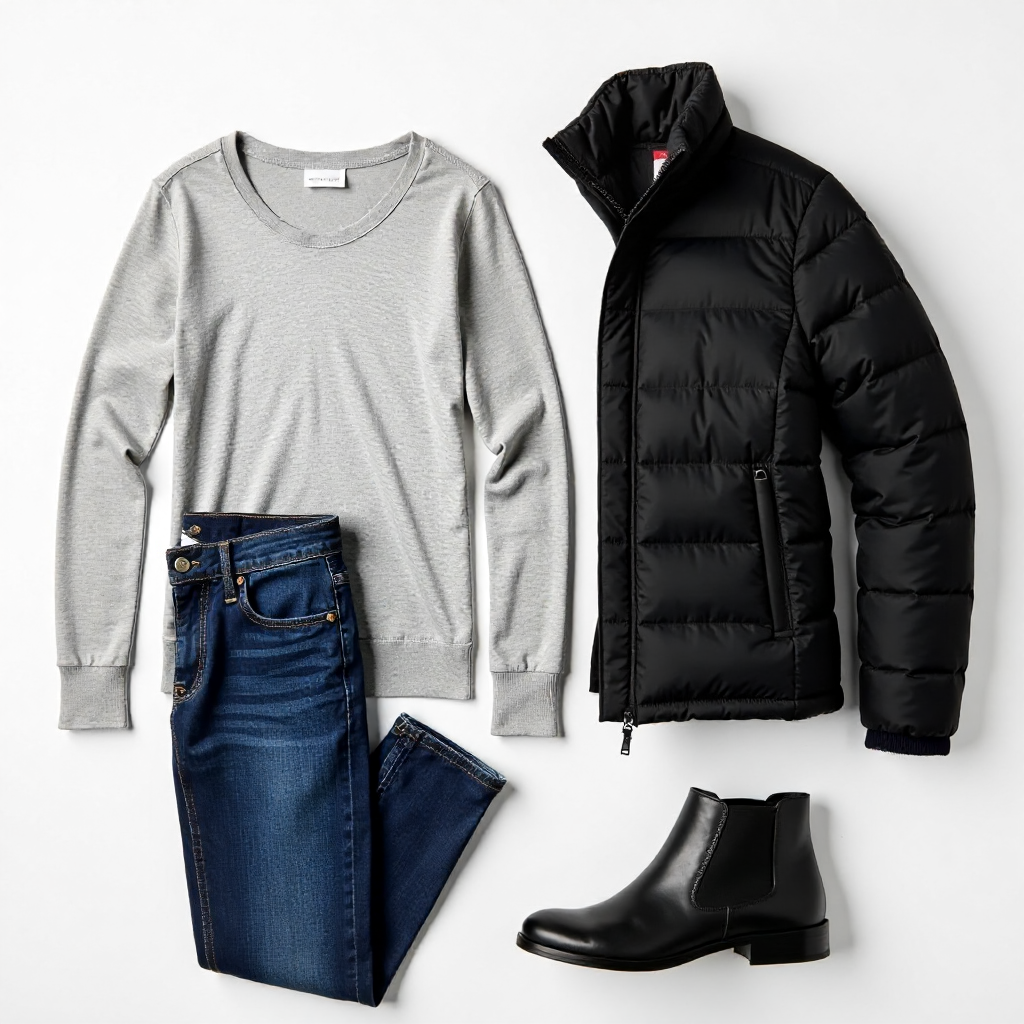
One common mistake: wearing a bulky hoodie under a fitted puffer. The hood bunches at the collar, the sleeves bunch at the cuffs, and the overall effect looks unintentional. If you want the hoodie aesthetic, wear it under an oversized puffer where there's room for it — or choose a hoodie with a slim cut specifically designed for layering.
Balance Your Proportions Like a Stylist
The core rule of puffer jacket styling is simple: volume on top, slim on the bottom — or vice versa. A quilted jacket already adds visual bulk to your upper body, so the bottom half needs to counterbalance it.
Skinny jeans, fitted trousers, or leggings are the natural partners for an oversized or longline puffer. They create a clear visual contrast that reads as intentional rather than accidental. Straight-leg jeans also work — they're not as narrow but they maintain a clean line that doesn't compete with the jacket's volume.
Cropped puffers flip the equation. Because the jacket ends at or above the hip, it creates space for wider bottoms: barrel-leg jeans, wide-leg trousers, or even a midi skirt. The proportions balance because the jacket isn't fighting for space with the width of the trousers.
One thing worth knowing: proportion rules aren't about body type in a prescriptive sense. They're about visual balance. Anyone can wear any silhouette — the question is just whether the outfit looks considered. A tall person in an oversized puffer with wide-leg trousers creates a deliberately maximalist look. A petite person in the same combination might want to keep the trouser hem cropped so the outfit doesn't overwhelm their frame. Small adjustments, not different rules.
Build Outfits for Every Occasion
A puffer jacket can dress up or down depending on what you build around it — and having a few reliable outfit formulas makes getting dressed in winter considerably easier.
Casual Weekend
An oversized puffer jacket over a crewneck sweatshirt, slim-fit jeans, and chunky sneakers is the easiest formula in the category. It requires almost no effort to look put-together because the proportions are already balanced. Add a beanie and you're done.
Smart-Casual
A longline padded coat in a neutral color (black, camel, navy) over tailored trousers and a fine-knit turtleneck reads as polished without being formal. Swap the chunky sneakers for leather loafers or ankle boots and the outfit shifts registers entirely. This is the combination that makes a puffer jacket office-appropriate in most casual or creative workplaces.
Elevated Evening
Pairing a sleek, fitted puffer with wide-leg satin trousers or a midi slip skirt creates an interesting contrast between the casual, quilted fabric and more formal pieces. It's a combination that works because the tension between the two elements is intentional. Keep accessories minimal — a simple chain necklace and pointed-toe boots — and the outfit lands in elevated territory without looking overdressed.
Use Color and Texture to Elevate the Look
Color strategy and texture mixing are where a puffer jacket outfit goes from functional to genuinely stylish. The two most reliable approaches are monochromatic dressing and deliberate texture contrast.
A monochromatic outfit — wearing different shades of the same color from head to toe — is one of the most effective ways to make a puffer jacket look expensive. An all-black combination (black puffer, black trousers, black boots) is the classic version, but tonal camel, grey, or navy works just as well. The single-color palette draws attention away from the jacket's bulk and toward the overall silhouette.
Texture mixing adds visual interest without introducing color complexity. Quilted fabric has a distinctive surface texture that contrasts well with:
- Denim — the structured weave of jeans or a denim shirt creates a clean contrast with the soft, padded surface of the jacket
- Leather — leather trousers or a leather skirt under a puffer jacket creates a high-low combination that reads as intentionally styled
- Knitwear — a chunky ribbed knit visible at the collar or cuffs adds warmth visually as well as physically
Avoid matching textures that are too similar. A puffer jacket over a quilted vest, for example, creates a muddled look where neither piece reads clearly.
Accessorize to Pull the Outfit Together
Accessories do a disproportionate amount of work in a puffer jacket outfit. Because the jacket itself is a large, dominant piece, the details around it — at the neck, head, hands, and feet — are what give the look its personality.
A wool or cashmere scarf tucked into the collar of a longline puffer adds texture and color at exactly the right focal point. Choose a scarf in a contrasting color for visual interest, or match it to the jacket for a cleaner, more minimal look. A chunky knit scarf in oatmeal or cream works with almost any jacket color.
Beanies and bucket hats both work well with puffer jackets, though they send different signals. A ribbed beanie reads as casual and practical; a structured wool bucket hat reads as more considered. Either way, headwear is worth thinking about — it completes the outfit in a way that leaving your head bare doesn't.
For footwear, the two strongest choices are ankle or knee-high boots and chunky sneakers. Boots add height and a sleek line that balances the jacket's volume. Chunky sneakers lean into the casual, streetwear-adjacent energy of an oversized puffer. Avoid delicate or strappy footwear — it creates a proportion mismatch that's difficult to resolve.
Gloves are often treated as an afterthought, but leather or knit gloves in a color that echoes something else in the outfit — your boots, your scarf, your bag — tie the look together in a way that's subtle but noticeable.
Care and Maintenance Tips to Keep Your Puffer Looking Its Best
A puffer jacket that's lost its loft looks deflated and shapeless — and no amount of styling fixes a flat, clumped jacket. Keeping your down or synthetic-fill jacket in good condition is part of keeping it stylish.
Most puffer jackets are machine washable, but always check the care label first. When washing a down jacket, use a gentle cycle with a down-specific detergent and add two or three clean tennis balls to the dryer. The balls break up clumps and restore the fill's loft as it dries — this step is not optional if you want the jacket to come out looking right.
Synthetic-fill puffers are generally more forgiving: they dry faster and don't clump as severely when wet, which is one reason they're worth considering if you live in a rainy climate. The trade-off is that synthetic insulation typically has a lower warmth-to-weight ratio than high fill-power down, meaning a synthetic jacket may need to be thicker to achieve the same warmth.
For storage, never compress a puffer jacket into a stuff sack for extended periods. Long-term compression damages the fill clusters and reduces loft permanently. Hang it loosely in a closet or store it in a large breathable bag between seasons.
Frequently Asked Questions
Can you wear a puffer jacket to work or a smart-casual event?
Yes — a longline puffer or padded coat in a neutral color over tailored trousers and a knit top reads as smart-casual in most modern workplaces. The key is choosing a clean silhouette without excessive branding or technical details.
What do you wear under a puffer jacket to stay warm?
A thermal base layer (merino wool works best) plus a slim mid-layer like a fine-knit sweater or fleece. Avoid bulky hoodies under fitted puffers — they create bunching at the collar and cuffs that looks unintentional.
How do you style an oversized puffer jacket without looking shapeless?
Pair it with slim or straight-leg bottoms to create a clear contrast between the voluminous top and the lean lower half. Tucking in any visible layers and keeping accessories streamlined also helps the outfit read as intentional.
Are cropped puffer jackets as warm as longline styles?
No — a cropped jacket leaves the hips and lower back exposed, which reduces overall warmth significantly. Cropped puffers are better suited to milder winter days or worn over longer layers like a longline knit that extends below the jacket's hem.
What shoes go best with a puffer jacket outfit?
Ankle boots, knee-high boots, and chunky sneakers are the strongest choices. Boots add a sleek line that balances the jacket's volume; chunky sneakers complement the casual, relaxed energy of an oversized puffer. Avoid delicate footwear — the proportion mismatch is difficult to resolve.