How to Choose Winter Boots That Complement Your Outerwear
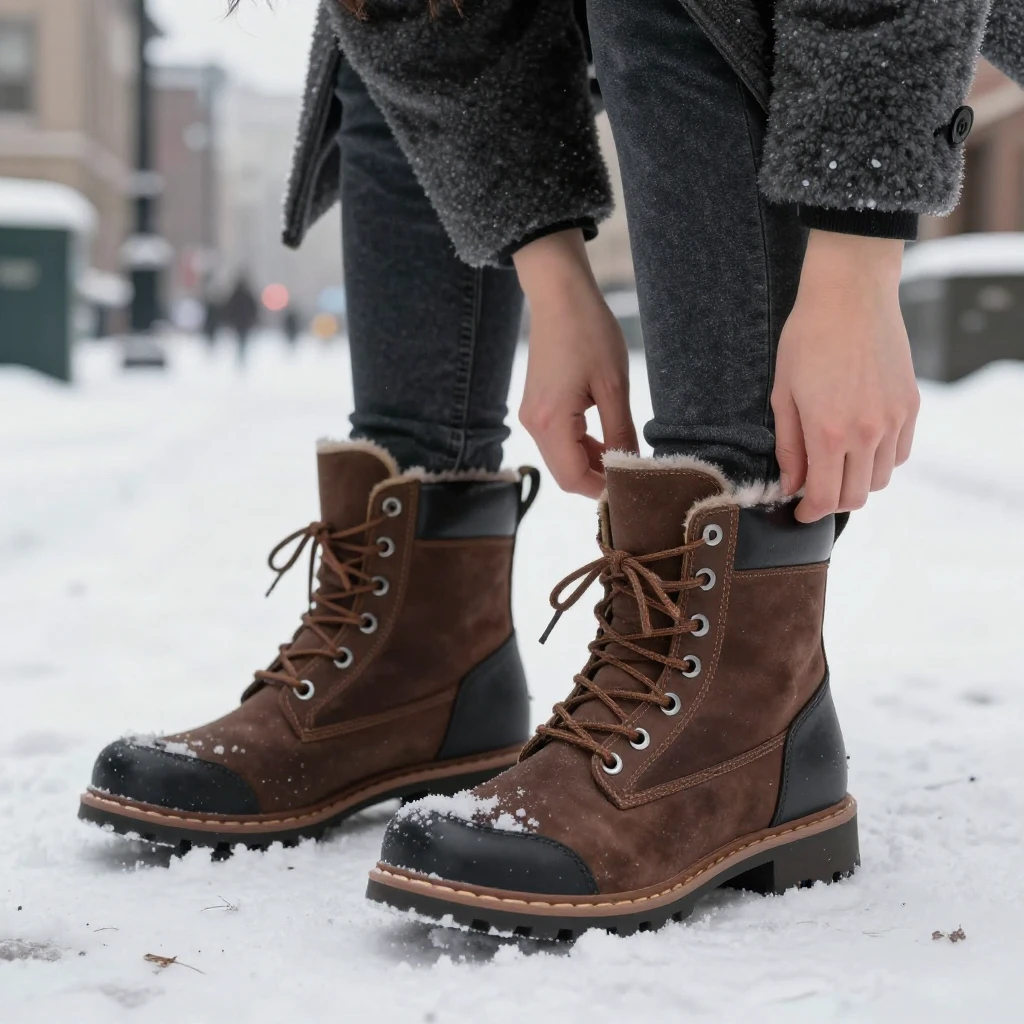
The right winter boots should work with your jacket or coat in two ways: they need to suit the weather, and they should feel at home with the outerwear’s length, shape, and style. A warm parka, a tailored wool coat, and a short puffer each call for different boot proportions, but comfort and safe footing come first.
Start by considering where you’ll wear the outfit, then choose a boot height, color, and finish that complement what you own. This approach helps you build winter outfits that look considered without sacrificing warmth or practicality.
Start with the Weather and Your Winter Routine
Choose winter boots for the conditions you face most often: insulation for cold, waterproof materials for slush and rain, and dependable tread for slippery paths. Your daily routine matters as much as the forecast, since a short commute and hours outdoors place different demands on footwear.
For dry, cold days, insulated boots with a comfortable lining may be enough. If you regularly walk through wet snow, look for a waterproof construction or a clearly stated waterproof membrane, plus sealed seams where available. Water resistance can handle light moisture, but it is not always the same as waterproof protection.
Tread and traction deserve equal attention. A visibly patterned rubber outsole can help with grip on packed snow, though no boot guarantees traction on ice. If icy sidewalks are common, consider removable traction aids and take shorter steps; footwear alone cannot eliminate the risk of slipping.
- Cold and mostly dry: Prioritize insulation, a secure fit, and a sole suited to your usual walks.
- Wet, slushy streets: Favor waterproof materials, a gusseted tongue, and easy-to-clean uppers.
- Snowy outdoor days: Look for more coverage, a supportive tread, and room for warm socks.
There is a trade-off: a heavily insulated, high-coverage boot can feel cumbersome indoors or on a mild day. Match the boot to your typical conditions rather than buying the most extreme option for an occasional storm.
Match Boot Height to Your Jacket or Coat
Match boot height to both your outerwear hem and the conditions: ankle boots suit shorter jackets and milder days, while mid-calf or taller boots add coverage with longer coats and deeper snow. The goal is a balanced outline that lets you move freely.
Ankle-height winter boots work well with cropped parkas, hip-length puffers, and straight-leg trousers. They leave more of the leg visible, which can keep a bulky jacket from making the whole outfit feel weighed down. In deep snow, however, a low shaft offers less protection from snow entering at the top.
Mid-calf boots are versatile with knee-length parkas and many casual coats. They provide extra coverage without reaching as high as the hem of a long coat. Try them with slim or straight trousers, or with a skirt and warm tights, checking that the shaft does not bunch awkwardly under your hem.
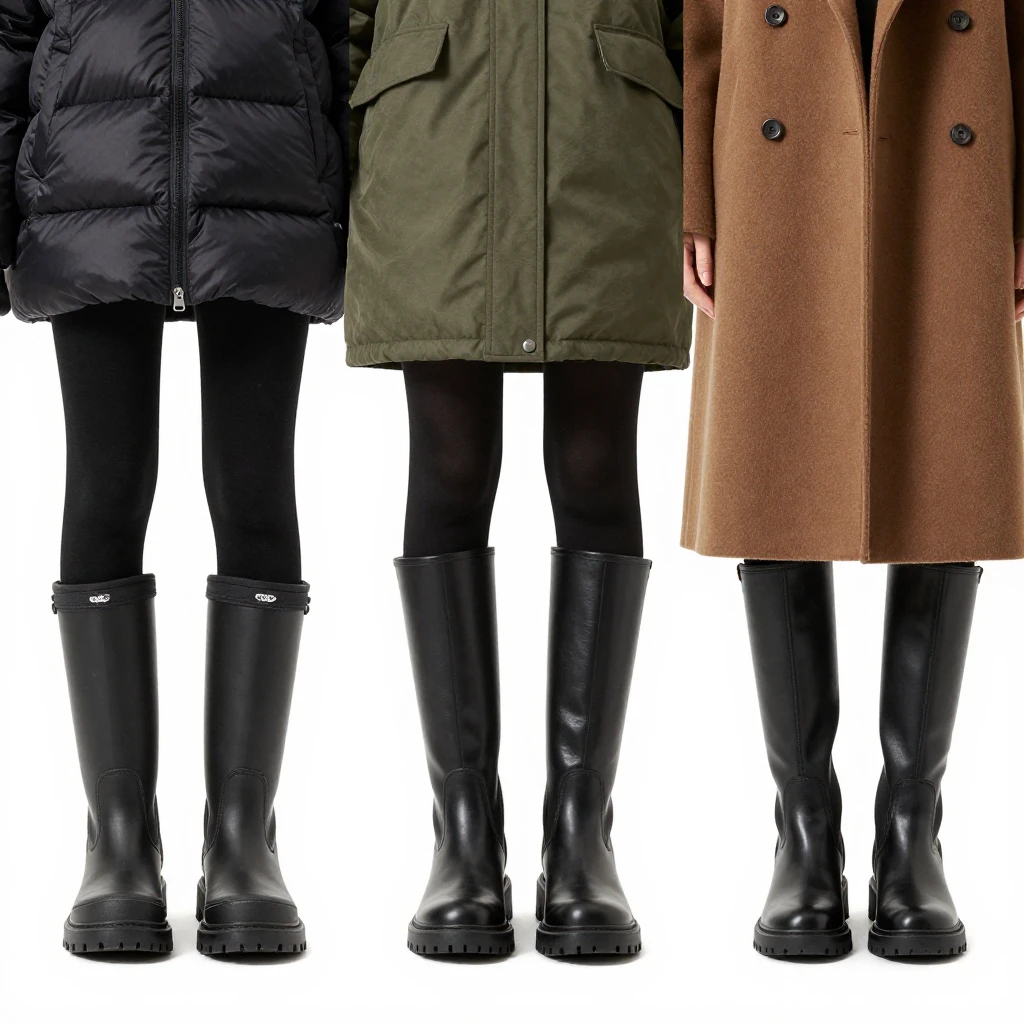
Tall boots can complement long wool coats and longer parkas, especially when you want a streamlined look or need more coverage. With wide-leg trousers, make sure the fabric falls cleanly over the boot rather than catching on it. A long coat and tall boot combination can feel warm, but both pieces may be too much for a mild, indoor-heavy day.
Use the coat’s shape as a guide: a fitted or belted wool coat often looks balanced with a sleeker boot, while a roomy parka can accommodate a more substantial sole and shaft. These are starting points, not rules. Your height, preferred trouser cut, and comfort matter more than matching a formula.
Coordinate Colors, Materials, and Style
Winter boots do not need to match your jacket exactly; coordinating color temperature, material, or one repeated detail is enough to make the outfit feel cohesive. Choose a relationship between the pieces rather than searching for a perfect color match.
Black, brown, gray, and deep navy boots are useful anchors for winter wardrobes. Black boots pair easily with dark puffers and many wool coats. Brown or tan leather can warm up a cream, olive, or camel coat, while gray boots can sit comfortably beside charcoal outerwear. A colored jacket can be balanced with a neutral boot, or you can echo a small accent from a scarf or hat.
Materials shape the formality of an outfit. Smooth leather or a neat matte finish tends to look at home with a tailored wool coat. Suede has a softer appearance, but it needs more care in wet or salty conditions. Rugged synthetic uppers and pronounced tread often suit parkas and puffers, where a practical finish feels intentional.
You can mix textures without making the outfit look busy. For example, pair a matte puffer with a smoother boot, or a wool coat with a lightly textured leather boot. Keep one element visually quiet if another is bold: a bright jacket works well with a simple boot, while an embellished or heavily lugged boot can be the outfit’s main detail.
Color coordination is most useful when it supports what you already wear. If your outerwear is neutral, a boot in a related shade creates an easy set of combinations. If you own several jackets, a versatile boot color may be a better purchase than a pair chosen for just one coat.
Balance Warmth, Comfort, and Proportions
The best winter boots leave enough room for comfortable socks, keep your feet supported, and balance the visual bulk of your outerwear. A warm boot that pinches or makes your stride awkward will not be a good everyday match.
Try boots with the socks you expect to wear. Your toes should have room to move, but your heel should not lift excessively as you walk. Thick socks can add warmth, yet wearing them in a boot that is already tight may compress the foot and make the fit uncomfortable. Check the fit while standing and walking, not just while seated.
Consider the whole outfit’s proportions. A voluminous puffer often pairs well with a boot that has some structure or a sturdy sole, while a slim wool coat may call for a narrower profile. This does not mean every piece must be sleek. Rather, avoid stacking too many oversized elements if you want a defined silhouette: a roomy coat, wide trousers, and very bulky boots can obscure the shape of the outfit.
Layering affects fit and warmth. Leave room for your usual winter socks, and make sure trousers or base layers sit comfortably inside or over the shaft. If you plan to tuck pants into tall boots, test that combination before buying. For a polished look with a long coat, a clean line from hem to boot often works better than fabric caught around the ankle.
Warmth also depends on more than insulation. Dry socks, appropriate layering, and protection from wind and moisture all contribute. An insulated boot can feel too warm on a long indoor commute, so consider how much time you spend outside versus in heated spaces.
Pair Boots with Common Outerwear Styles
Parkas, puffer jackets, and wool coats each pair well with different boot profiles, but weather suitability should guide the final choice. Use the jacket’s shape and function to narrow your options, then choose a boot that fits your routine.
Parkas
Parkas often have a relaxed shape and weather-ready details, so they work naturally with insulated boots that have practical tread. A mid-calf boot can add coverage for snowy walks, while an ankle-height waterproof style may suit city errands in lighter conditions. Keep the outfit balanced with tapered trousers or leggings if both the parka and boots are substantial.
Puffer jackets
With a short puffer, ankle or mid-calf boots can create a balanced outline and leave room for straight-leg jeans or winter trousers. A longer puffer can work with either streamlined boots or a sturdier style, depending on its volume. Repeat a color from the jacket in a small accessory if the boots are a different neutral.
Wool coats
A tailored wool coat usually pairs well with a sleeker leather or leather-look boot, especially for work or city outfits. Choose a weather-appropriate sole even when the coat looks formal; smooth dress soles may be less practical on wet sidewalks. For casual styling, a lug sole can give a classic coat a more relaxed feel without requiring a perfect match in formality.
Check Practical Details Before You Buy
Before buying winter boots, check the fit with your winter socks, test how securely they close, and inspect the outsole and care requirements. These details determine whether the boots will work with your daily outerwear and local weather.
- Fit and flex: Walk in both boots and check for toe pressure, heel slip, or rubbing. Make sure the sole bends comfortably where your foot naturally flexes.
- Closures: Laces allow adjustment around the foot and ankle; zippers are quicker to use. A combination can be convenient, but check that the closure stays secure and is easy to operate with cold fingers.
- Sole grip: Look at the tread pattern and material, not just how rugged the boot appears. Deep lugs can be useful in snow, though they may feel less refined on indoor floors.
- Care: Check whether the upper needs a protective treatment and how it should be cleaned after exposure to road salt. Follow the maker’s instructions, since care varies by material.
- Outerwear compatibility: Try the boots with your usual coat and trousers. Confirm that the shaft does not catch on the hem and that the overall outfit suits your everyday settings.
For everyday winter wear, waterproof boots are especially useful if you encounter regular rain, slush, or wet snow. If your climate is mostly dry and you spend little time outdoors, water-resistant footwear may be sufficient. Choose based on exposure, and remember that waterproof construction can feel less breathable than an unlined or lightly lined boot.
Frequently Asked Questions
Which boots go best with a long winter coat?
Mid-calf or tall boots can balance a long winter coat, while sleek ankle boots offer a lighter, polished option. Choose the height that works with your trousers and the amount of snow you face.
Can winter boots look good with a puffer jacket?
Yes. Ankle and mid-calf boots both pair well with puffers. A sturdier boot suits a voluminous jacket, while a streamlined boot can keep a longer or more fitted puffer outfit from looking overly bulky.
Should winter boots match my jacket color?
No. Matching exactly is optional. Coordinate through a shared neutral, a similar warm or cool color tone, or a repeated detail such as a leather finish.
Are waterproof boots necessary for everyday winter wear?
They are useful when your routine includes wet snow, slush, or rain. In dry winter conditions, water-resistant boots may be enough, provided their warmth and traction suit your needs.
When choosing winter boots to complement your outerwear, work from the weather outward: select the protection you need, then refine the height, color, and silhouette to suit your jackets and coats. A pair that fits well and handles your real routine will earn more wear than one chosen for appearance alone.